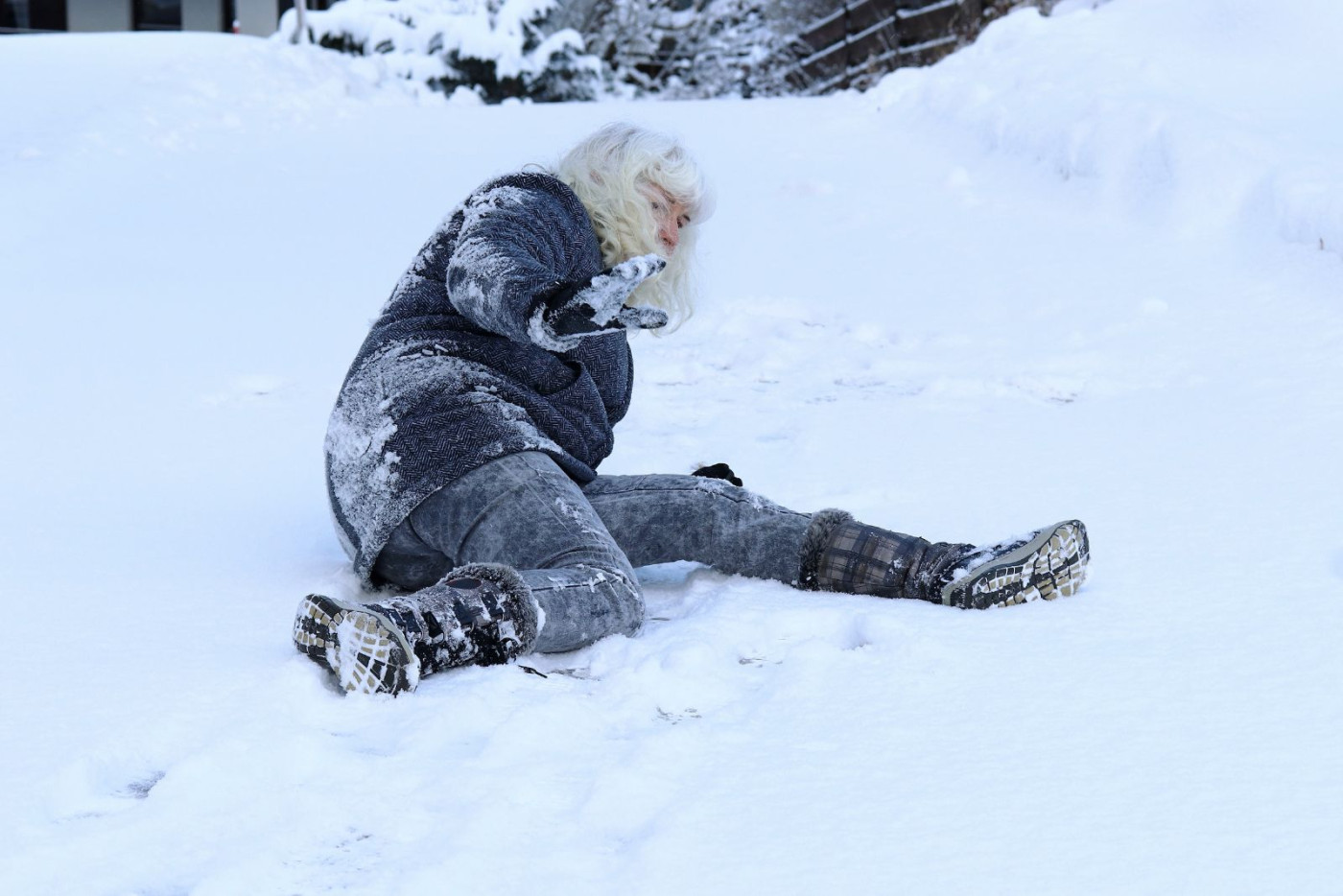
Did you know that roughly 1 million people get injured from slipping and falling on ice and snow each year? These injuries can range from minor to serious, including broken bones and, sadly, even death. But there are some things you can do to help avoid slips and falls and the injuries that come with them.
Plan Ahead
Keep an eye on weather forecasts and wait for conditions to clear before heading out. Allow extra time if conditions are bad or there was recent bad weather that dropped snow and created the potential ice. Also, be aware of thawing and freezing cycles that can create dangerous black ice.
Wear Proper Clothing
Choose footwear with non-slip soles (rubber soles are best), deep treads, and wide, low heels. If your shoes need additional traction, consider adding traction cleats/snow grips. Layer up – not only will it keep you warm, but it will also act as extra padding if you do fall.
Walk Like a Penguin (yes, really)
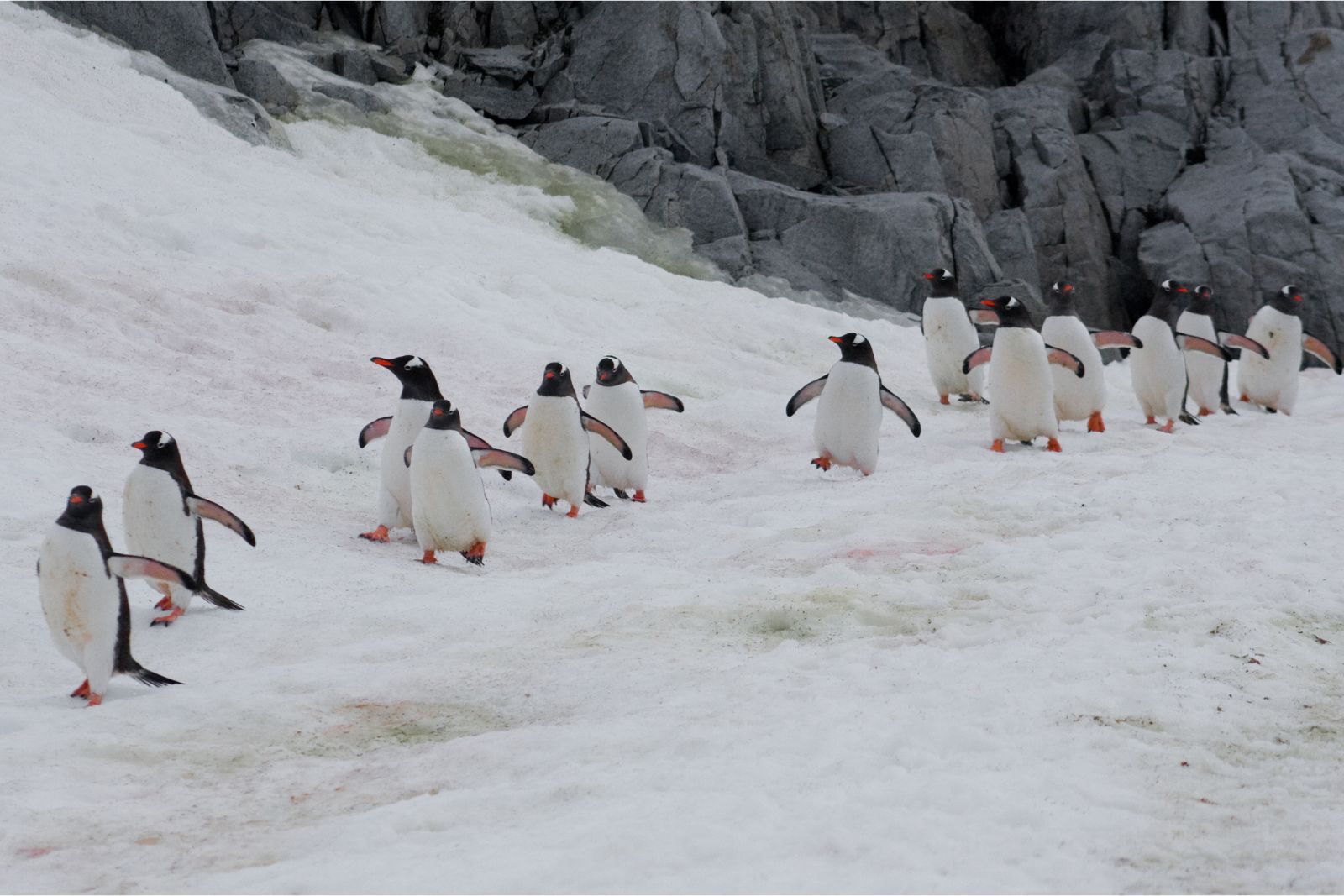 Take small, flat-footed steps, point your feet out slightly, shuffle, keep your knees somewhat bent in a slightly wider than shoulder width stance, slightly extend your arms away from your body to help with balance, and keep your center of gravity over your feet. Keep your head up and don’t lean forward.
Go Hands Free
Keep your hands out of your pockets for balance; use handrails, a walking stick, walker, or cane (make sure anything aid you use is winter-ready with rubber bottoms); and keep phones and other objects in bags and not in your hands, which will also help with the next tip.
Stay Alert
Put your phone away, watch for dark spots (black ice), and test suspicious areas with your foot. Always use your best judgement when outside during winter weather – if something looks dangerous or doesn’t feel right, avoid it.
Use Designated Paths
Avoid shortcuts that could be hiding ice and other hazards. If a walkway is completely covered with ice, try to travel along its grassy edge for traction.
Step Down, Not Out
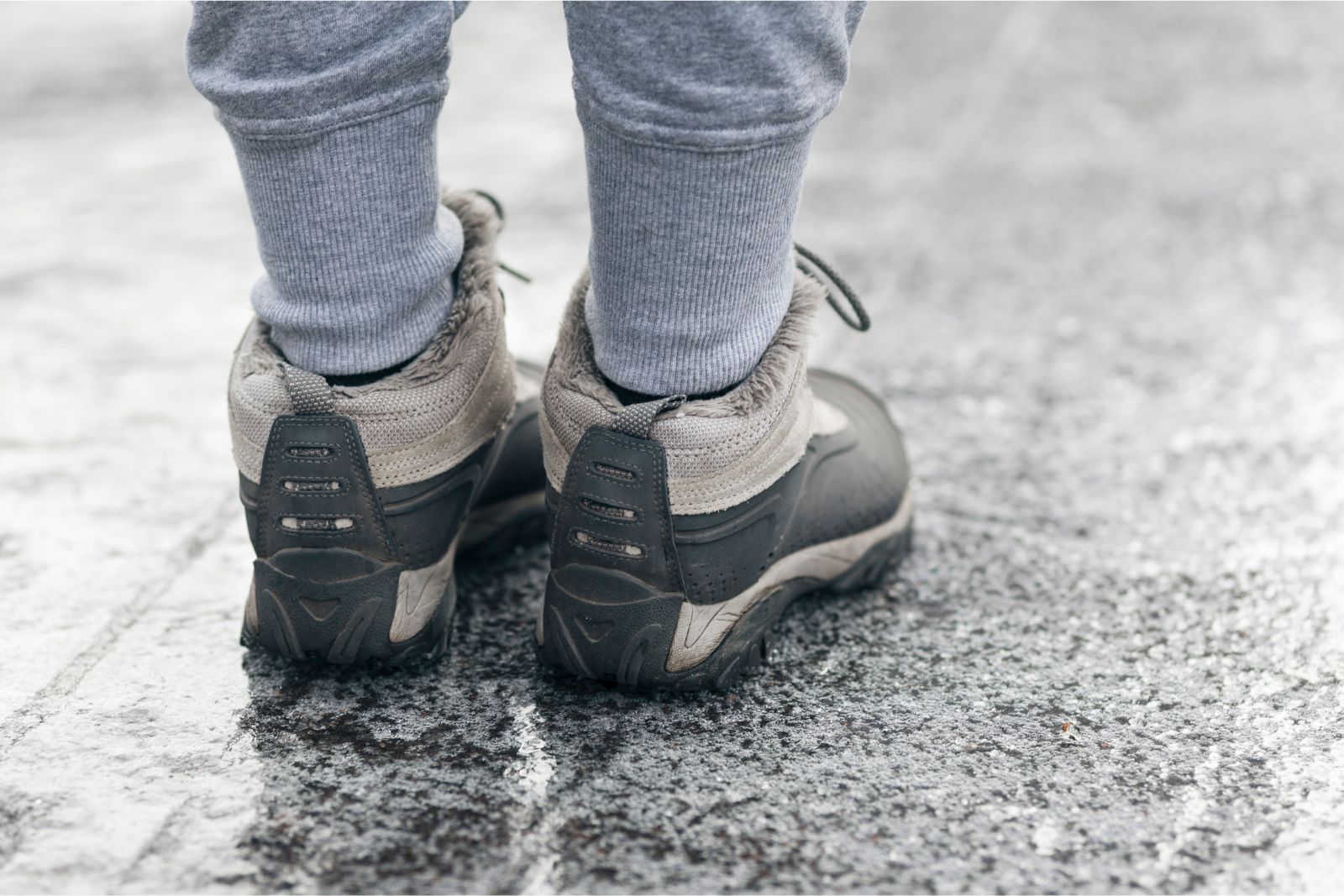 When exiting a vehicle or stepping off a curb, step down and place both feet flat on the ground before moving. Avoid curbs that are painted – the paint can decrease traction and increase chances of slipping and falling.
Be Aware of Indoor Hazards
While most winter-related falls happen outdoors, the snow and ice can also create some hazards indoors. Shoes that have been in snow and ice can bring water indoors, and floors with smooth surfaces – wood, tile, concrete, and similar finishes – can get slippery when wet. Use mats to help dry shoes when you enter a building and pay attention to where you are stepping so you can avoid wet spots.
Fall “Properly”
Even if you follow all the tips, you may still fall, but there are ways to fall that can help avoid injury:
- Fall with sequential contacts at your thigh, hip, and shoulder to avoid using your arms to protect against breakage.
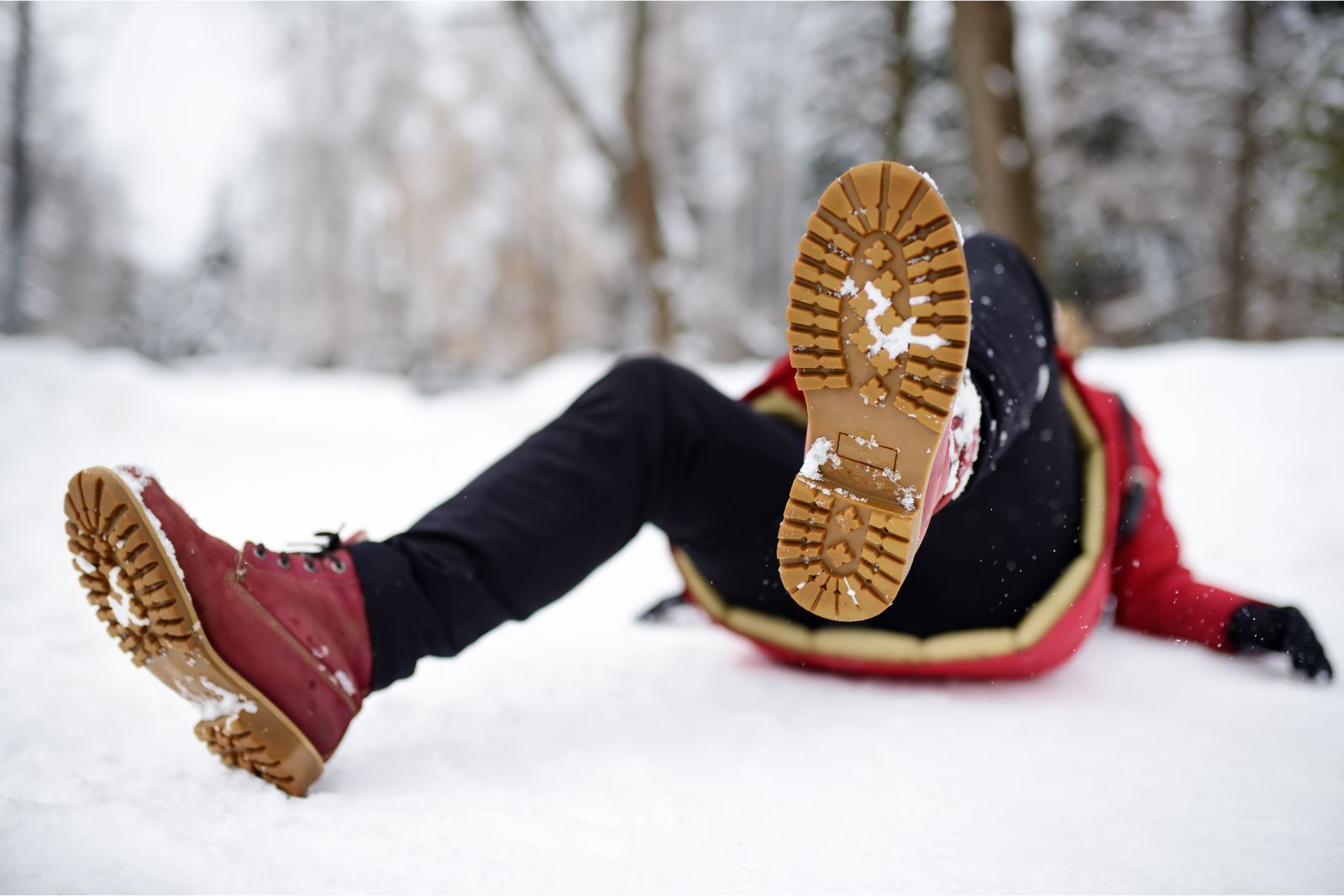 Roll with the fall. Try to twist and roll backwards, rather than falling forward. This can also help give you some control over where you fall (aim for grass and other soft surfaces).
- Relax as much as possible when you begin to fall.
- If you are falling backward, tuck your chin to your chest to help avoid slamming your head on the pavement. If you fall forward, turn your face to the side.
- Toss the load you are carrying. Protect yourself instead of the objects being carried.
- Wait for someone to help you get up in case you are injured or to avoid additional falls.