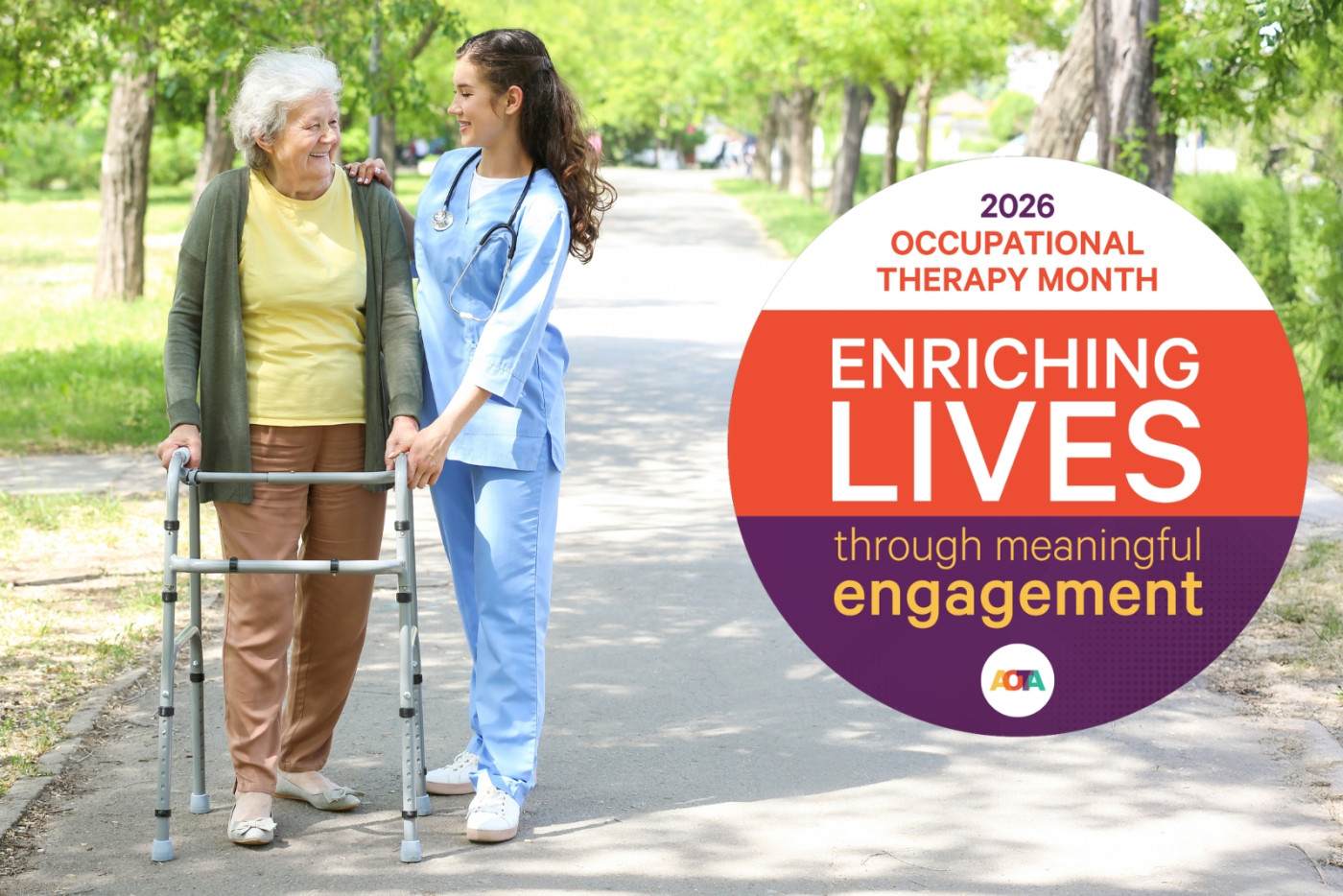
April is Occupational Therapy Month, and at CNS we are proud to have a highly skilled team of Occupational Therapists to help patients improve their health, wellbeing, and ability to participate in important activities in their lives.
What is Occupational Therapy?
Occupational Therapy (OT) is a treatment that helps people of all ages regain, develop, or maintain skills needed for daily living and working (“occupations”). You might need OT after an injury or to manage symptoms from a chronic condition or disability. It focuses on enabling independence through customized interventions, such as adaptive equipment, environmental modifications, and therapeutic exercises.
Examples of Occupations
Occupations are daily life activities that are meaningful to individuals, from personal care and work to leisure activities.
 Activities of Daily Living (ADLs): Eating, showering, grooming, dressing, and toilet hygiene.
- Instrumental Activities of Daily Living (IADLs): Cooking/meal preparation, managing finances, shopping, housekeeping, driving, and community mobility.
- Health Management: Medication management, social/emotional health promotion, and physical activity management.
- Education & Work: Participating in school, engaging in job performance, and volunteering.
- Play & Leisure: Engaging in hobbies, play for children, and nonobligatory activities for fun.
- Rest & Sleep: Preparing for and obtaining restful sleep.
How Occupational Therapists Help Regain Independence
When someone is injured, ill, or disabled, their ability to do occupations can be limited. Occupational Therapists focus on improving their ability to perform occupations independently. There are generally three stages of Occupational Therapy:
- Assessment: Usually, the first time you meet with an Occupational Therapist, they’ll conduct what’s known as an assessment. They’ll get to know you and your loved ones, talk about your goals and discuss any barriers to success you’re currently experiencing. They may also examine your home, workplace, or any other environment you visit frequently to help them know exactly where you’ll need support and how they can help you meet your goals.
 Interventions: These are tools, resources, or other changes in your environment or routine that can help you complete tasks better. This can include learning to use assistive equipment, like a prosthetic limb or wheelchair; exercises to improve physical strength and coordination; concentration and memory exercises; practicing everyday activities, like getting dressed, preparing food, and doing household chores; and recommending work with a mental health professional for emotional or mental health issues. Everyone’s needs are unique, so your Occupational Therapist will customize interventions to meet your specific needs and goals.
- Evaluations and Outcomes: This is an ongoing phase, in which your Occupational Therapist will monitor progress as you get used to your interventions and adjust as needed to ensure they are working for you.
What’s the Difference Between Occupational Therapy (OT) and Physical Therapy (PT)?
Both Occupational and Physical Therapy help you move your body better or more safely. The difference between them is the end goal.
Occupational Therapy is about helping people improve their ability to do daily tasks and live as independently as possible. It’s focused on helping accomplish routine tasks and do favorite activities safely.
Physical Therapy is typically needed to improve physical mobility or manage specific symptoms of a health condition, like pain and stiffness.
Occupational and Physical Therapy sometimes overlap, and you might need both at the same time. They might share goals but have different approaches to improving your health and safety.