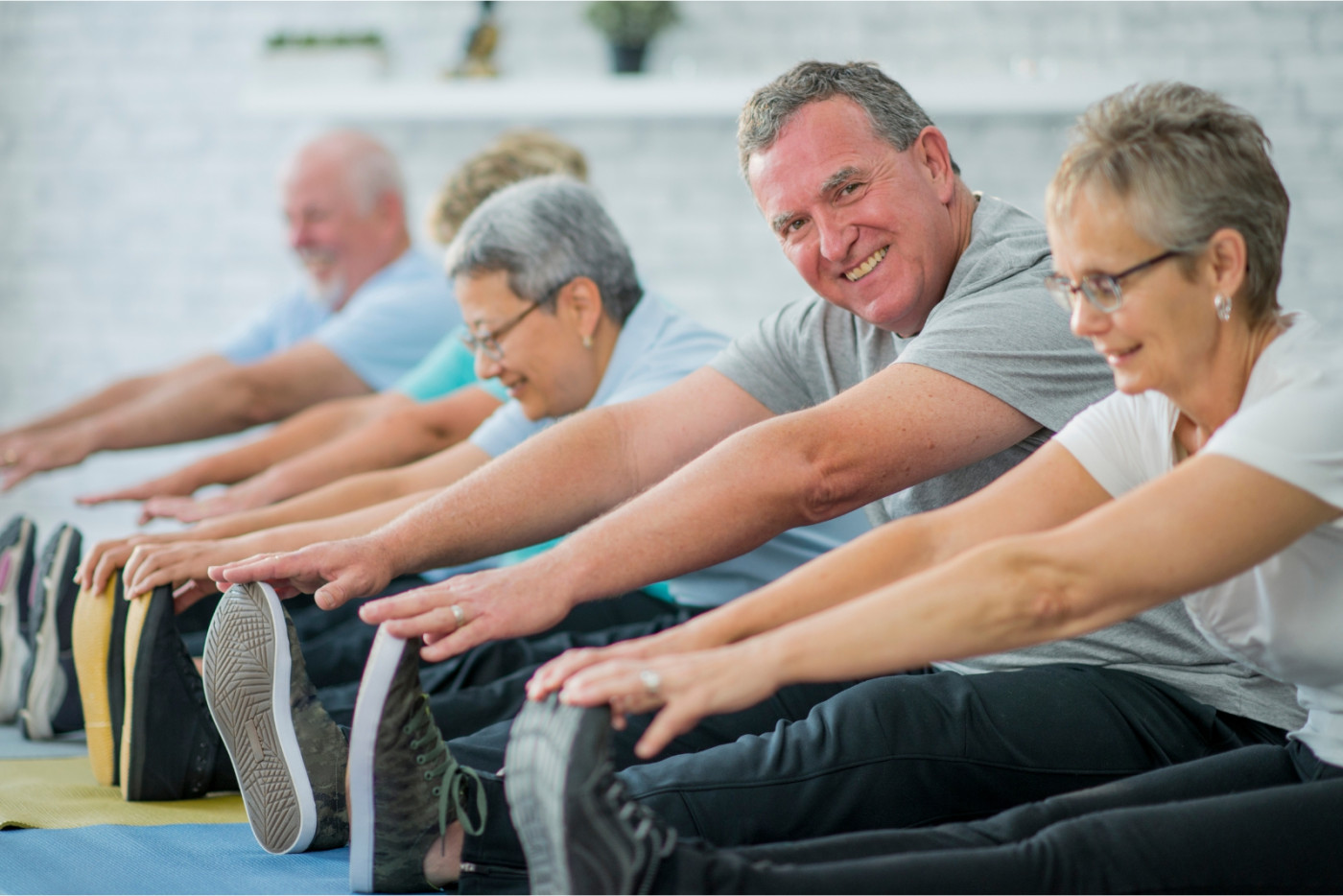
Is stretching part of your daily routine? If not, you probably want to add it in. Stretching increases mobility, reduces stress, improves circulation, and more, and it doesn’t have to take a lot of time: Just 5 to 10 minutes at least 2-3 times a week can improve your health.
Benefits of Stretching
- Increased flexibility and range of motion: Stretching helps your muscles become more elastic, which improves your ability to move and perform daily activities with greater ease.
- Improves posture: Stretching can help correct muscle imbalances that lead to poor posture.
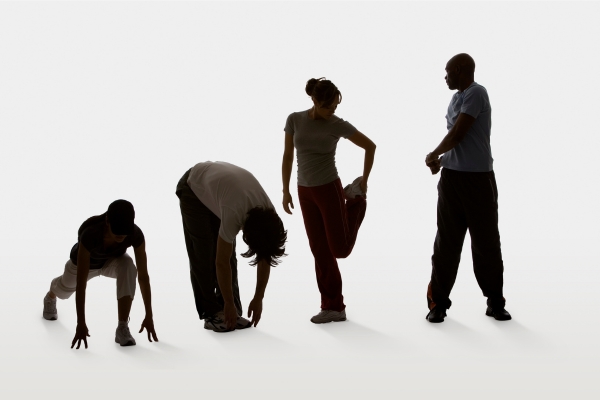 Injury prevention: Stretching increases flexibility and reduces muscle tension, which can lower your risk of injury during physical activities. Stretching before working out can also reduce muscle soreness.
- Alleviate pain: Regular stretching helps reduce and prevent pain, especially lower back pain caused by tight hamstrings, hip flexors, and other back muscles.
- Improves circulation: Stretching increases blood flow to your muscles, which helps bring nourishment and gets rid of waste in the muscle tissue.
- Reduce stress and improve mental clarity: Stretching promotes relaxation, improves mood and focus by releasing endorphins, and may even contribute to better sleep quality when done in the evening.
Stretching Essentials
Ready to add stretching to your routine? Here are some tips for safe, effective stretching.
- Warm up first: Never stretch cold muscles – you could hurt yourself. Warm up first with light walking, jogging, or biking at low intensity for 5 to 10 minutes. Or, stretch after your workout when muscles are warm.
- Don’t overdo it: You should feel tension, not pain. If it hurts, ease off the stretch.
 Be consistent: The benefits of stretching accumulate over time. Aim for a regular routine, ideally at least 2-3 times a week for 5-10 minutes at a time.
- Strive for symmetry: Everyone’s bodies are different, meaning your flexibility will likely be different than that of a dancer or gymnast. Instead of trying to match their flexibility, focus on having equal flexibility side to side.
- Focus on major muscle groups: Concentrate on major muscle groups such as your calves, thighs, hips, lower back, neck, and shoulders. Also, stretch any muscles and joints you routinely use. Make sure you stretch both sides.
- Don’t bounce: Stretch in a smooth movement. Bouncing while stretching can injure your muscle and contribute to muscle tightness.
- Hold your stretch: Breathe normally and hold each stretch for about 30 seconds. In problem areas, you may need to hold for around 1 minute.